
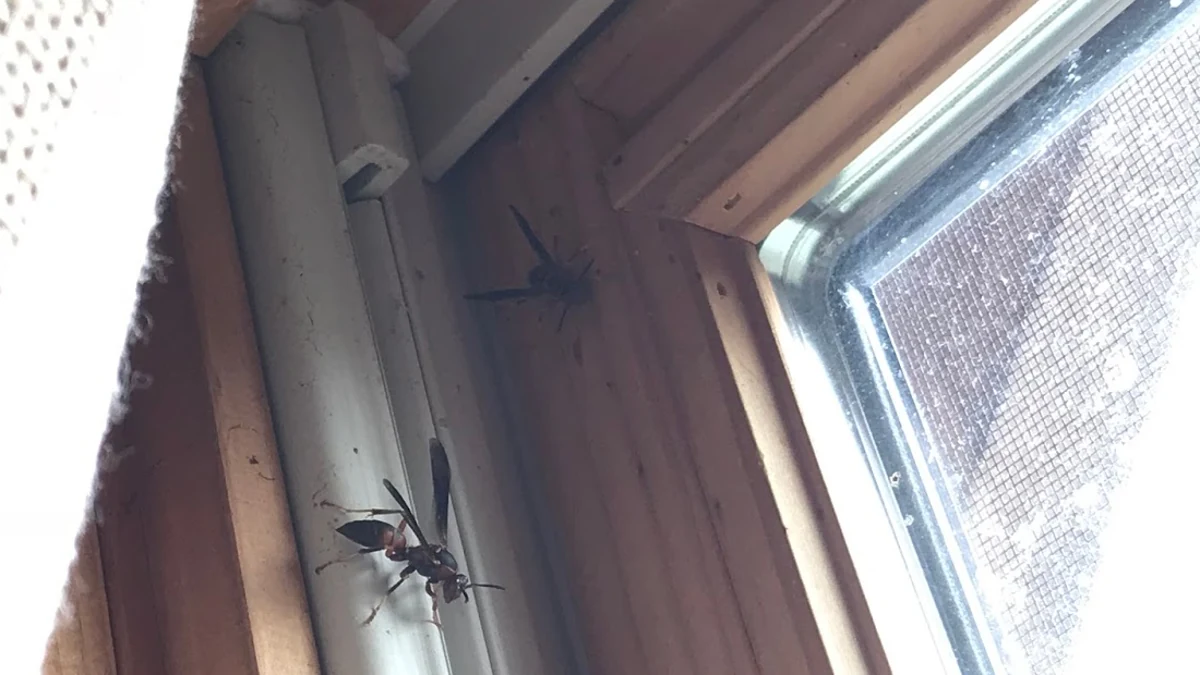
It is that time of year when wasps begin waking up.
They often gather in the corners of sunny windows, soaking up the heat. I have always wondered where they spend the winter. There must be a tiny Motel 6 hidden somewhere inside the house.
During a home inspection, I check readily accessible systems and components throughout the property. That includes doors, light fixtures, switches, receptacles, faucets, and a representative number of windows.
Windows come in all shapes and sizes:
- Double-hung
- Single-hung
- Picture
- Garden
- Jalousie
- Hopper
- Awning
- Sliding
- Casement
- Bow
- Bay
- Transom
I will admit that I had to look up how to spell jalousie.
For those unfamiliar with the term, both the upper and lower sashes of a double-hung window can move vertically.
Double-hung windows are dangerous.
A Necessary Disclaimer
Properly functioning double-hung windows are perfectly acceptable.
I do not want a rumor going around town that says:
“Skip said double-hung windows are dangerous, and now we cannot buy this house!”
Let me explain.
When inspecting a window, I look for visible deterioration, damaged panes, proper operation, and evidence of a failed insulated-glass seal. A failed seal may result in fogging or condensation between the panes that cannot be removed by cleaning either surface.
I have learned a few things about windows during my inspection career.
Watch the Upper Sash
When unlocking an unfamiliar double-hung window, it is wise to keep one hand on the upper sash.
I learned that lesson after the upper sash dropped and smashed the tips of my fingers.
Once was enough.
Anyone who has experienced this type of injury knows the feeling: electrical shock waves all the way to your toes. With a little luck, you also get to keep a purple fingernail that matches your purple fingertip.
Tilt-In Windows
Some double-hung windows have tilt latches that allow the sash to tilt inward for cleaning. This feature can be especially convenient on an upper floor because the exterior glass can be cleaned without using a ladder.
When accessible and practical, I may check the tilt mechanism. A sash that will not tilt may be binding, painted in place, improperly aligned, fitted too tightly, or equipped with damaged hardware.
Now, back to the wasps.
The Inspection
I was inspecting a home on a chilly day and wearing my trusty denim jacket.
I approached a fairly large double-hung window and went through my normal observations:
- Check for damaged panes
- Check for visible deterioration
- Look for evidence of a failed insulated-glass seal
- Check the window’s operation
This particular window had tilt latches.
After tilting the sash inward, I needed to apply a small amount of force to return it to the upright position. Because the window was large, I had to stretch both arms over my head.
When people raise their hands above their heads, they instinctively look upward.
That is exactly what I did.
As the window snapped back into place, the frame shook slightly—and I felt something drop into the sleeve of my jacket.
I noticed one wasp sitting in the corner of the window.
A moment earlier, that wasp had apparently had a friend.
Now his friend was inside my sleeve.
It could have been a piece of wood. It could have been a large dust bunny.
The tiny wings flapping against my arm told me it was neither.
Thankfully, the buyers and their real-estate agent had left only moments earlier. I am not sure how they would have reacted to the sight of their home inspector screaming, running through the house, and removing clothing as he went.
Fortunately, the wasp was still in a winter stupor and did not sting me.
The Final Verdict
Double-hung windows are dangerous.
At least when they contain wasps.
The photograph associated with the original article was taken afterward. The lone wasp had more friends hiding nearby.